
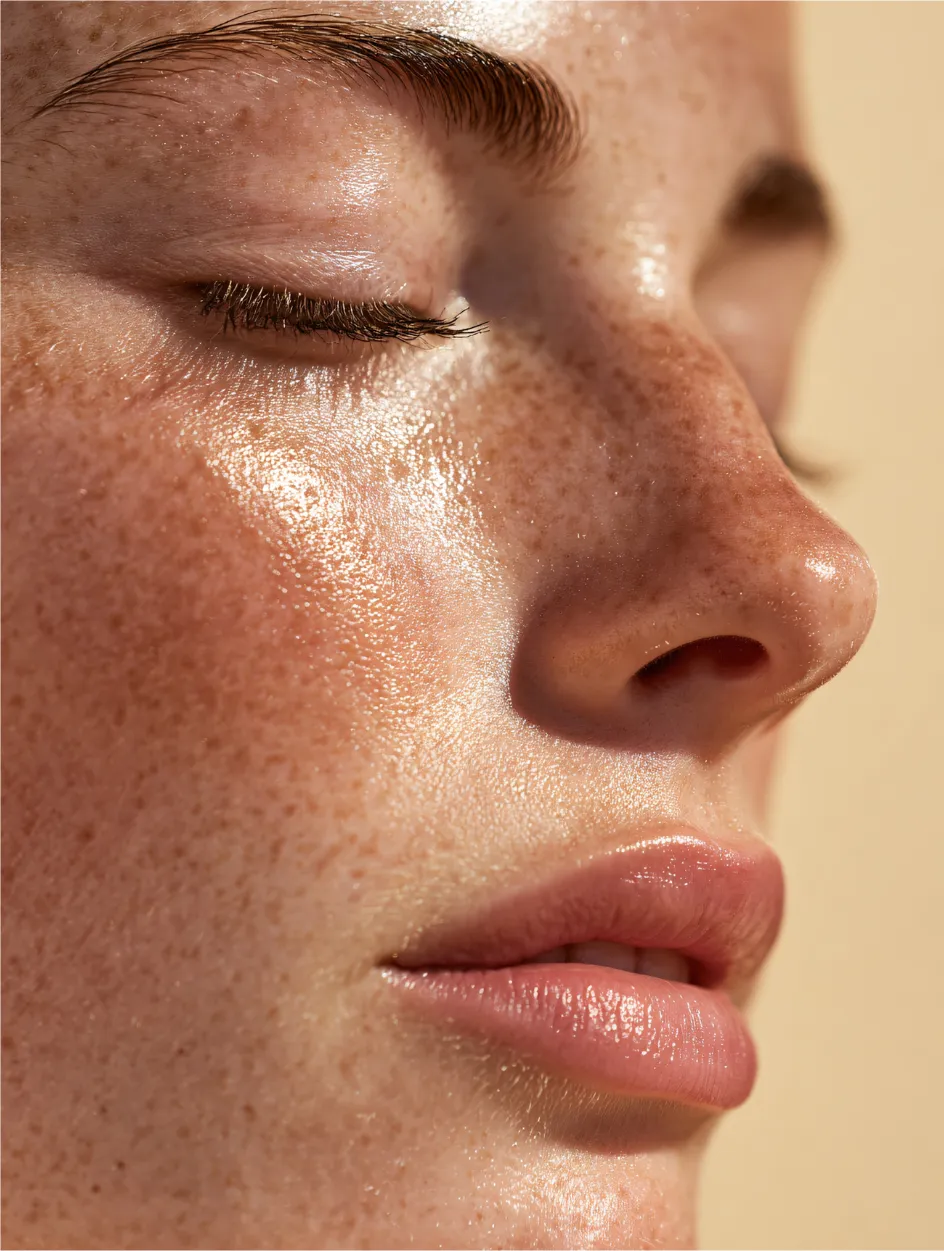
2026 Trend
Skin Longevity: Measure Skin Health and Maintain Long-Term
Wrinkles come, wrinkles go. Skin quality endures — when you measure, understand, and support it. What skin longevity means in clinical practice.

Medically reviewed by
Aesthetic Medicine Physician · Last reviewed: May 2026
A question I hear in my practice almost weekly in 2026: "How old is my skin actually — really?" The honest answer: chronological age tells surprisingly little. A 52-year-old with good routines often has better skin quality than a 35-year-old after ten years of poor sleep and zero SPF.
Skin longevity responds to a paradigm shift: away from pure wrinkle correction, toward preserving functional, healthy skin structure. It is not a promise to stop ageing. It is the method to make skin ageing visible early, address its drivers, and keep the tissue performing as long as possible.
What skin longevity means concretely
Three building blocks make the difference. First: objective measurement instead of gut feeling. Second: a treatment plan that addresses several skin layers — not just wrinkle depth. Third: repeat measurement, so effectiveness becomes verifiable.
This is what distinguishes skin longevity from the classic anti-aging label. People who say "anti-aging" usually mean what is already visible — and what should be corrected. Skin longevity asks: What is the state of collagen, elastin, microcirculation, and cellular renewal rate? Today, these questions can be measured.
5 parameters that matter
The Skin Quality Score is a standardised assessment of skin quality across five axes. What I appreciate about this method: it replaces the vague "you look fresher" with concrete values patients can compare across years.
- 1
Firmness
How quickly the skin springs back under pressure.
Firmness reflects collagen architecture. Each year reduces dermal collagen by roughly 1 % — cumulative loss becomes noticeable. We assess firmness via cutometry or clinical pressure-rebound testing.
- 2
Elasticity
The skin's ability to return to its original shape.
Elastin synthesis essentially stops after age 25. Sun exposure and oxidative stress accelerate the loss. Visible in reduced tightness on neck, cheeks, and around the eyes.
- 3
Hydration
Water content of the upper skin layers.
Well-hydrated skin appears plumper, fine lines surface later, sensitivity reactions are reduced. Corneometry provides objective measurement. Patients notice tightness, dullness, or dehydration lines.
- 4
Smoothness
Microrelief, pore appearance, texture quality.
Skin surface tells a story about what happens beneath. Uneven texture, enlarged pores, or a tired microrelief are early signals of declining cellular renewal.
- 5
Pigment
Evenness of skin tone.
Sun-induced pigment changes are the number-one self-perceived ageing signal. Hyperpigmentation, sun spots, and uneven complexion significantly reduce perceived skin quality.
Diagnostics in my practice
Honest analysis begins not in the treatment chair, but with the medical history: lifestyle, UV exposure, hormone cycles, sleep. These data complement the objective score — because a 50-year-old marathon runner needs a different plan than a 40-year-old shift worker.
The clinical examination uses magnified lighting, standardised photography, and tactile assessment of skin elasticity. Cutometry for firmness and corneometry for hydration are added when quantitative values are needed for follow-up.
Important: this measurement does not replace a dermatological skin cancer screening. It complements it. Anyone noticing changes in their skin pattern should additionally see a specialist for preventive examination.
Treatment building blocks in the longevity concept
No single procedure covers all five score axes. A thoughtful plan combines building blocks that address different skin layers — dermis, epidermis, microcirculation, pigment regulation.
Biostimulation
PLLA biostimulator, CaHA biostimulator, or HA-Bioremodelling stimulate the body's own collagen production. Results build over months and last accordingly.
Polynucleotides
Polynucleotides work at the cellular level. They can reduce micro-inflammation and support skin regeneration.
Skinbooster
Skinboosters deliver hydration deep into the dermis. Immediately noticeable, well-combinable with biostimulation.
EBD — Energy-Based Devices
Radiofrequency or ultrasound tighten connective tissue without injection. Useful when firmness declines along neck and jaw angle.
Infusion therapy
Vitamin and NAD+ infusions address oxidative stress and cellular energy. Complement, not replacement.
Topical routine
SPF, retinoid, antioxidants — the foundation. Without this routine, every treatment works against headwind.
A realistic 5-year plan
Skin longevity is not a sprint. What looks like a quick transformation in fashion images is, in practice, the result of consistency over years. An example plan I often recommend:
Year 1 — Baseline + Build
Establish the Skin Quality Score. Implement topical routine. First treatment series (e.g., HA-Bioremodelling + polynucleotides). Re-measure after six months.
Year 2 — Deeper layers
Targeted biostimulation where score axes are weak. If indicated: radiofrequency series. Optimise routine.
Year 3 — Maintenance
Repeat effective building blocks at maintenance rhythm. Score comparison to year 1: what worked?
Year 4 — Adjustment
Needs shift with each life phase. Hormonal transitions or stress phases may require new emphases.
Year 5 — Score review
Comprehensive review across all five axes. Plan for the next five years. What proved itself stays; what didn't, goes.
What I say realistically: nobody stops ageing. But anyone who consistently treats skin as an organ — not as a surface — wins back years of healthy appearance.
Frequently asked questions about skin longevity
What does skin longevity mean?
Skin longevity describes preserving functional, healthy skin over time. Focus is on skin quality, not on cosmetic correction of individual wrinkles.
How is skin quality measured?
In practice, we use the Skin Quality Score: five parameters — Firmness, Elasticity, Hydration, Smoothness, Pigment. Assessment combines clinical and device-based diagnostics.
At what age does skin longevity make sense?
Sensible from mid-20s onward. Early diagnostics establish a baseline against which later changes can be objectively measured. Starting later is never too late.
Which treatments belong to the longevity concept?
Building blocks include biostimulators, polynucleotides, skinboosters, energy-based devices, and targeted infusions. Selection depends on the individual Skin Quality Score.
How often should the Skin Quality Score be measured?
Initial measurement as baseline. Re-measurement after six months or following completion of a treatment cycle. Progress becomes objectively visible this way.
Is skin longevity the same as anti-aging?
No. Anti-aging focuses on correcting visible signs. Skin longevity targets long-term skin health and function. The difference lies in the time horizon.
Scientific basis
- [1] Goldie K et al. Skin Quality — A Holistic 360° View: Consensus Results. Clin Cosmet Investig Dermatol (2021).
- [2] Humbert P et al. Skin biophysical parameters — current evidence and clinical use. Skin Res Technol (2019).
Linked studies provide professional context and do not constitute treatment promises.
Ready for a Skin Quality Analysis?
In a personal consultation we determine your Skin Quality Score and discuss a realistic plan for your skin.
Book a consultation