
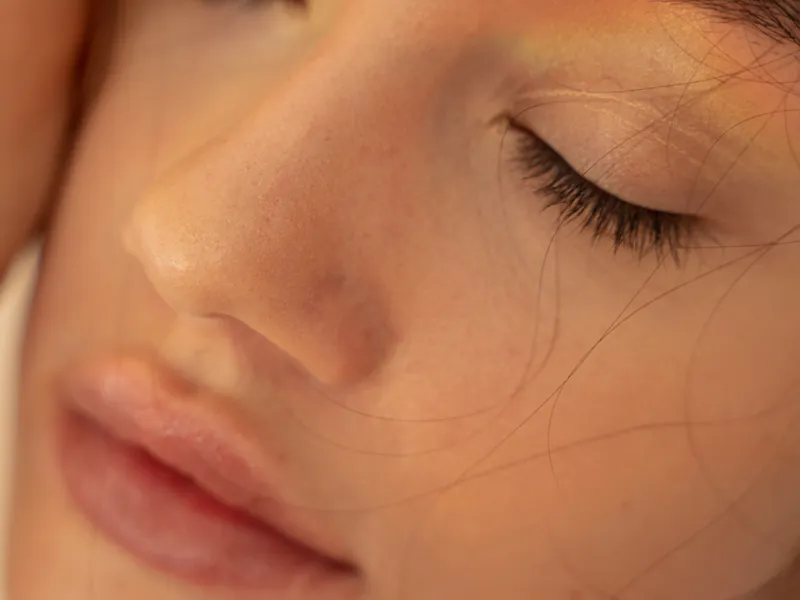
Five years ago, my youngest patient was in her early 40s. Today, I regularly see someone in their mid-20s — not because something bothers them, but because they want to get ahead of ageing. "Prejuvenation" is the term, and it's fundamentally changing aesthetic medicine. But not everything sold under that label actually makes sense.
What prejuvenation actually means
The word combines "prevention" and "rejuvenation". The idea: instead of waiting until the signs of skin ageing are visible and then correcting them, you start earlier — preventing certain changes from becoming pronounced in the first place. Think of it like dental care: regular cleaning is better than waiting until a tooth breaks down.
It sounds logical. And in many cases, it is. But there's a fine line between sensible prevention and unnecessary treatments on young people who simply don't need them. That's exactly the line I want to draw here.
What actually makes sense in your 20s
In your 20s, the skin is generally well supplied — collagen production is robust, elasticity is high, volume loss isn't an issue. Still, certain things can be worthwhile:
Skin protection and care
This sounds boring, but it's the single most effective thing you can do in your 20s: consistent sun protection (SPF 50, every day, even in winter), a good moisturiser, and retinol from your mid-20s. No treatment in the world can compensate for years of UV damage. I tell every patient this — even though it doesn't generate any revenue for me.
Skin quality treatments
From your mid to late 20s, it can make sense to invest in skin quality. Mesotherapy or skinboosters supply the skin with hydration and nutrients. This isn't correction — it's skincare on a higher level. Think of it as a professional workout on top of your daily walk.
Targeted wrinkle prevention
If you already have very pronounced facial expressions in your early 20s — for example a deep frown line that's visible even at rest — you can benefit from an early, gentle treatment. The principle is called micro-dosing: very low doses that slow down wrinkle formation without freezing the face. The goal isn't smoothness — it's deceleration.
What does NOT make sense in your 20s
And this is where it gets important. There are treatments that serve no medical purpose in your 20s, and I turn them down:
- Preventive cheek filler: If you have no volume loss at 25, you don't need volume. Full stop. Placing filler where nothing is missing changes the proportions — and not for the better.
- Preventive tear trough treatment: The tear trough is one of the most demanding areas of the face. Without genuine volume loss, treating it is not just unnecessary — it can create problems that weren't there before.
- Anti-aging biostimulators at 25: At that age, your body still produces plenty of collagen. Stimulating something that already works well delivers no measurable benefit.
I know not every colleague sees it this way. On social media, "preventive filler" on people in their early 20s is shown routinely. My position: just because you can do something doesn't mean you should.
The sensible timeline: what's worthwhile and when?
Everyone ages differently, so age ranges are only rough guides. But as orientation:
From 25
- Consistent sun protection and good skincare
- Mesotherapy or skinboosters for skin quality (optional)
- Micro-dosing for a pronounced frown line (only if needed)
From 30
- Skin quality treatments become more relevant (Profhilo, skinboosters)
- Targeted wrinkle treatment in the upper face when lines are visible at rest
- Polynucleotides to thicken thinning skin
From 35–40
- Combination therapies start to make sense (more on that here)
- Volume loss in the cheeks, temples, and jawline becomes treatable
- Biostimulators (Radiesse, Sculptra) for long-term collagen building
Why social media distorts the picture
A large part of the prejuvenation hype comes from social media. Influencers show their "preventive filler" appointments like hair salon visits. The problem: what looks natural on Instagram is often anything but. Filters, lighting, and camera angles make the difference — not the treatment.
On top of that: someone who starts getting regular filler at 22 may have more problems at 35 than someone who did nothing at all. Tissue stretches, filler can migrate, and the natural reference point is lost. I see this in my practice — patients in their early 30s who've had filler for years and whose faces now look puffy. The correction is more involved than the prevention ever was.
My advice to young patients
- Sunscreen is the best prejuvenation. I'm not joking. UV radiation causes 80% of visible skin ageing. SPF 50, every day. That alone is worth more than any treatment.
- Invest in skin quality, not corrections. Mesotherapy, skinboosters, good skincare — these are sensible investments in your 20s. Filler and volume replacement can wait.
- Find a doctor who also says no. Anyone recommending a "full face" treatment at 23 is not acting in your interest. A good doctor explains what makes sense — and what doesn't.
- Less is more. This applies to aesthetics in general, but especially to young patients. Every treatment that isn't necessary today doesn't need to be reversed tomorrow either.
My conclusion
Prejuvenation isn't a bad idea — if you understand it correctly. It doesn't mean starting the full programme at 22. It means being conscious about your skin, investing in quality early, and using targeted treatments when they truly make a difference.
The best prevention is boring: sun protection, a healthy diet, good sleep, stress reduction. The second best: a doctor who honestly tells you when the right time for more has come.